Species library · Plants & herbs
Sonchus oleraceus
Typically in season from April to October in the northern hemisphere. Found in Disturbed ground. Has toxic lookalikes, so check carefully.
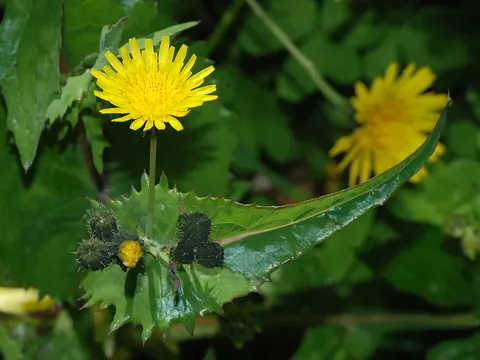
Photo: (c) Colin Meurk, some rights reserved (CC BY-SA), uploaded by Colin Meurk · iNaturalist
Typical window in the northern hemisphere, peak April to October. The southern hemisphere runs about six months offset, and your own timing depends on local weather, so check your town.
Smooth Sow-thistle is usually found in Disturbed ground.
Toxic look-alikes: Common groundsel, Prickly sow-thistle, Field sow-thistle. Only forage with a confident ID.
Open Smooth Sow-thistle in the Forage app for its full field guide entry with more photos, key features and toxic lookalikes to check against. Add it to your watchlist and the app pings you the moment it comes into season at your exact spot, worked out from live weather, elevation and billions of occurrence records.


Smooth Sow-thistle is generally in season from April to October in temperate northern regions. The exact timing shifts with latitude, elevation and each year's weather. Check the Season Finder for your own location.
Smooth Sow-thistle is usually found in Disturbed ground.
Toxic look-alikes: Common groundsel, Prickly sow-thistle, Field sow-thistle. Only forage with a confident ID. Never eat any wild plant, berry, nut or mushroom unless you are completely certain of the identification. Check every find against a reliable field guide, and when in doubt, don't.
Forage helps you discover and identify wild plants, but identification is never 100% certain. Many edible plants have toxic lookalikes. Never eat anything you find based only on what this app tells you. Always confirm with a field guide, an experienced forager or a local expert. The season score tells you where to look, too: it’s not a guarantee. Mind conservation law and property rights as well.
Species photos via Wikimedia Commons and iNaturalist · full credits