Acorns are the fruit of the oak tree and contain the seeds that can grow new oaks. They start off green and turn brown before falling to the ground, and in autumn squirrels, badgers and deer feed on them. This guide shows how to tell the acorns of six oak species apart, how to judge ripeness, what a mast year is, what the law says about picking, and what to do if someone may have swallowed something harmful. Whether acorns can be eaten is not covered here.
An acorn develops from a pollinated female flower into a large, shiny seed held in a scaly wooden cup. Young acorns are green and mature to brown before they fall.
The sections below describe features of six oak species in Europe and North America.
English oak (Quercus robur), also called common oak, has acorns 2 to 2.5 cm long on long stalks, sitting in cupules, the cup shaped base of the acorn. As it ripens, the green acorn turns brown, loosens from the cupule and falls, sprouting the following spring. Its leaves have rounded lobes and short leaf stalks.
Sessile oak (Quercus petraea) takes its name from its stalkless acorns, which are attached directly to the twigs. Its leaves are lobed with a long leaf stalk, and the lobes are shallow. The two species often hybridise.
First Nature sums up the difference: English oak has stalked acorns and leaves with virtually no stalks, while sessile oak is the other way round. It adds that sessile oak acorns are shorter and more conical than those of English oak, and that sessile oaks are more common on upland acid soils.
Turkey oak (Quercus cerris) has large acorns that mature 18 months after pollination. They are orange at the base, graduating to a green brown tip, with a hairy cup that looks like a hat made of moss. The Woodland Trust says these hairy cups distinguish it from native oaks.
Turkey oak is host to the gall wasp Andricus quercuscalicis, whose larvae damage the acorns of native British oaks.
Northern red oak (Quercus rubra) has acorns that mature in the second year, with a broad, usually shallow cup, borne singly or in clusters of 2 to 5. It generally first bears fruit at about 20 to 25 years, although most trees do not produce acorns in abundance until 40 to 50 years.
Bur oak (Quercus macrocarpa) has acorns that mature in the first year, with a deep, thick, fringed cup covering half to three quarters of the acorn. The common name bur refers to this cap covered acorn.
California black oak (Quercus kelloggii) has acorns 2.5 to 3.5 cm long.
For collecting California black oak acorns as seed, the USDA gives a simple test: take an acorn that is still in its cap and twist it lightly. If it pops out of the cap, the acorn is ripe. In its guide to California white oak (Quercus lobata), it says the nuts are considered ripe when they separate freely from the cap and fall from the tree.
In English oak, the ripening acorn turns brown, loosens from the cupule and falls. Turkey oak acorns need 18 months from pollination. Northern red oak acorns mature in their second year.
Mast is the term for the fruit of forest trees such as acorns and beech seeds, and a mast year is when the trees produce a bumper crop. Many scientists believe this serves to occasionally produce more seeds than wildlife can eat, increasing the seeds' chances of survival.
For sessile oak, the Woodland Trust says a mast year comes every five to 10 years, depending on conditions, when a tree produces up to 10,000 acorns in one season. Over its lifespan, an oak can produce as many as five million acorns. For California white oak, the USDA notes that good acorn production has been reported to occur annually, but high acorn numbers occur episodically.
Most acorns never get the chance to germinate, because they are a rich food source for wild creatures such as jays, mice and squirrels. The Woodland Trust names ripe brown acorns as an important food source for red squirrels.
In North America, the USDA lists bears, ground squirrels, jays, band-tailed pigeons, acorn woodpeckers and deer among the animals for which California black oak acorns are a favourite food.
In Germany, the Federal Nature Conservation Act lets anyone carefully take wild fruits in small quantities for personal use, at places that are not subject to an access ban.
In England and Wales, the Theft Act 1968 says that a person who picks fruit or foliage from a plant growing wild does not steal what they pick, unless they do it for reward, for sale or for another commercial purpose. For this rule, plant includes any shrub or tree.
Rules elsewhere, and rules for nature reserves or private land, are not covered here, so check the law where you are.
The BfR advises removing all plant remains from the mouth straight away and keeping them for the doctor. Then call a poison centre or see a doctor or hospital. Useful information is which plant it was, which parts were eaten, how much and how long ago; for children, age and weight also matter.
For Germany, the BfR says one or two glasses of water or tea can be drunk as a first measure. It advises against milk or salt water and against inducing vomiting. The NHS advises not to try to make someone sick and not to give the person anything to eat or drink.
The BVL lists poison centres in Germany and Austria, for example Giftnotruf Berlin on 030 192 40 and the Austrian centre on +43 140 643 43. Tox Info Suisse runs the Swiss emergency number 145. In the UK, the NHS says to call 999 or go to A&E if you think someone may have swallowed something harmful, and to call NHS 111 if you are not sure whether it is harmful. In the US, Poison Control says to call 1 800 222 1222 and not to wait for symptoms to develop.
For other wild plants of the season, read the winter foraging guide and the beginner's guide to foraging. To see which species are in season near you, use the Season Finder. All are linked below.
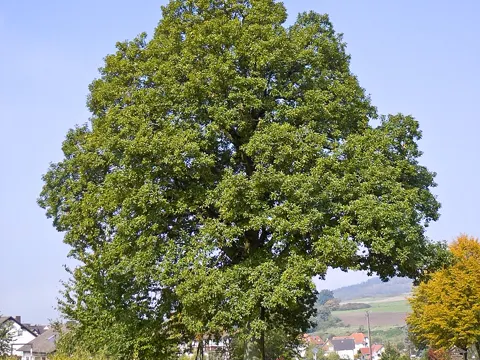 Sessile oakQuercus petraea
 Turkey oakQuercus cerris
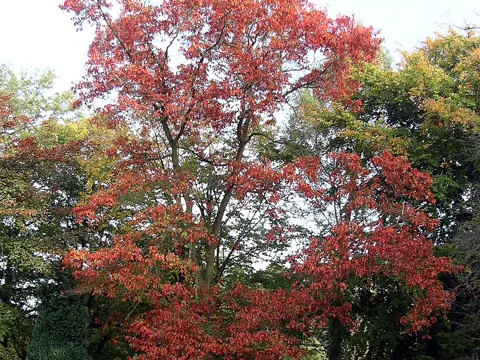 Northern red oakQuercus rubra
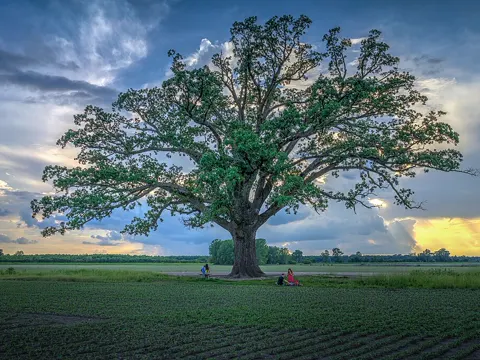 Bur oakQuercus macrocarpa
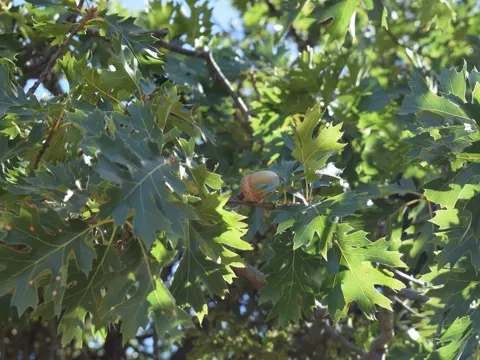 California black oakQuercus kelloggii
 California white oakQuercus lobata
Photos are for orientation only: a photo alone is not enough to identify a species.
This guide makes no statement on whether acorns can be eaten. If someone may have eaten a poisonous plant, the BfR advises calling a poison centre or seeing a doctor and not inducing vomiting. In the UK, the NHS says to call 999 or go to A&E if someone may have swallowed something harmful. In the US, call Poison Control on 1 800 222 1222. In Germany, for example, Giftnotruf Berlin is on 030 192 40, and in Austria the poison centre is on +43 140 643 43. In Switzerland Tox Info Suisse is on 145.
Acorns are the fruit of the oak tree and contain the seeds that can grow new oaks. Each develops into a large, shiny seed held in a scaly wooden cup.
First Nature puts it simply: English oak acorns have stalks, sessile oak acorns do not. With the leaves it is the other way round: English oak has virtually no leaf stalks, sessile oak clearly visible ones.
The USDA suggests twisting an acorn that is still in its cap lightly: if it pops out of the cap, it is ripe. Ripe English oak acorns turn brown, loosen from the cupule and fall.
A mast year is when forest trees produce a bumper crop of fruit such as acorns. For sessile oak, the Woodland Trust gives every five to 10 years, with up to 10,000 acorns from one tree in a season.
Jays, mice and squirrels eat many acorns, which is why most never get the chance to germinate. In autumn, badgers and deer also feed on them.
In Germany, anyone may carefully take wild fruits in small quantities for personal use at places without an access ban. In England and Wales, picking fruit from a plant growing wild is not theft unless it is done for reward, sale or another commercial purpose. Nature reserves, private land and other countries are not covered here.
Forage shows you the species in your region and pings you when the season starts.


All information without guarantee. This text is orientation on season and habitat, not an identification guide, and it makes no claim about whether any specific plant or mushroom is edible. Many species have toxic, some deadly, lookalikes. Never eat or use anything that has not been identified with certainty by an expert, such as a qualified mushroom inspector. We accept no liability for any harm arising from the use of this information. If you suspect poisoning, call your local poison control center or emergency services right away. Mind conservation law and property rights.